DispatchFrom Chennai stock — as fast as 1 business day for in-stock items
Minimum orderConfirmed on quote — depends on the pack and grade
PriceIndicative price on request, quoted within 1 hour in business hours
Quick answer
Paraformaldehyde — CAS 30525-89-4. Supplied by Suraj Chemicals, Chennai. Pack sizes: 25 kg bags (moisture-proof lined). Key specification: Assay (as HCHO): 91% – 93%. Typical uses: formaldehyde source for phenolic, urea and melamine resin manufacture; disinfectant and fumigant applications. Specification sheet and SDS can be downloaded from this page.
Last updated 19 November 2026.
Overview
Paraformaldehyde (CAS 30525-89-4) is one of the specialty chemicals products Suraj Chemicals supplies to industrial, institutional and manufacturing buyers across India from our Chennai base. It is commonly used for formaldehyde source for phenolic, urea and melamine resin manufacture; disinfectant and fumigant applications; biocide/preservative intermediate, among other applications in the specialty chemicals category. We pack Paraformaldehyde in 25 kg bags (moisture-proof lined), and can arrange bulk, drum or tanker quantities for larger requirements — full characteristics, applications and downloadable documentation are below, or you can request a quote directly.
Values above are well-established typical/standard specification properties for this product, compiled from published technical references — not a batch-specific lab report. Figures can vary batch to batch — request a current certificate of analysis with your order.
Origin
Imported – China
A certificate of analysis is supplied with every batch.
Applications
Formaldehyde source for phenolic, urea and melamine resin manufacture
Disinfectant and fumigant applications
Biocide/preservative intermediate
Formaldehyde source for general organic synthesis
Safety & Handling Summary
Paraformaldehyde — from the Safety Data Sheet
Topic
Summary
Signal word
Warning
GHS hazards
H228 — Flammable solid H302 — Harmful if swallowed H315 — Causes skin irritation H319 — Causes serious eye irritation H317 — May cause an allergic skin reaction H335 — May cause respiratory irritation
Chemical-resistant gloves (e.g. nitrile or neoprene). Replace at any sign of damage or degradation
Eye / face
Chemical safety goggles recommended, given the eye irritation hazard and potential for dust/vapour contact
Respiratory
Where ventilation is inadequate, use a respirator fitted with a combined particulate and organic-vapour/formaldehyde-rated filter
Body
Standard chemical-resistant protective clothing; antistatic clothing where dust-explosion risk is relevant
Transport (road)
UN2213 · Class 4.1 · Packing group III
Emergency handling
First aid, fire-fighting and spill / release measures are in Sections 4–6 of the SDS. Emergency contact: +91 70927 22822 / +91 98402 84032.
A summary of the Paraformaldehyde Safety Data Sheet. The full SDS is the authority: download it at the top of this page and read it before first use. Hazard ratings can change with grade and concentration, so confirm the transport class for each consignment.
Frequently Asked Questions
What is Paraformaldehyde?
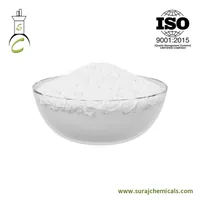
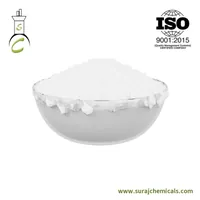
Paraformaldehyde is supplied by Suraj Chemicals as white crystalline powder or granules with a pungent, formaldehyde-like odour, identified by CAS number 30525-89-4. It falls under our Specialty Chemicals range — see the Specification Sheet table above for its full characteristics.
What is Paraformaldehyde used for?
Typical applications include: Formaldehyde source for phenolic, urea and melamine resin manufacture; Disinfectant and fumigant applications; Biocide/preservative intermediate; Formaldehyde source for general organic synthesis.
How should Paraformaldehyde be stored and handled?
Combustible solid that releases formaldehyde gas (toxic, pungent) on heating or decomposition -- a genuine hazard to be stated clearly. Store sealed in a cool, dry, well-ventilated place away from heat and ignition sources.
What packaging and pack sizes does Suraj Chemicals supply Paraformaldehyde in?
25 kg bags (moisture-proof lined). Contact us if you need a different pack size, or a bulk/tanker quantity.
What is the shelf life of Paraformaldehyde?
Typically around 24 months from date of manufacture when stored in original, unopened packaging under normal warehouse conditions, consistent with standard industry practice for this class of chemical. As with any industrial chemical, request the current batch's manufacturing date and a fresh certificate of analysis for orders where exact remaining shelf life matters.
Is Paraformaldehyde hazardous to handle?
Yes. Paraformaldehyde is classified under GHS (signal word: Warning) as: flammable solid (H228); harmful if swallowed (H302); causes skin irritation (H315); causes serious eye irritation (H319); may cause an allergic skin reaction (H317); may cause respiratory irritation (H335). Follow the storage and handling guidance above, use appropriate PPE, and download the Safety Data Sheet (SDS/MSDS) in the sidebar above for full GHS hazard, handling and PPE details.
Is a Specification Sheet, TDS or MSDS available for Paraformaldehyde?
Yes. A downloadable Specification Sheet (PDF) with full characteristics and specifications is available above, and a downloadable Safety Data Sheet (SDS/MSDS) for Paraformaldehyde is also available above.
Can I get a sample or discuss order quantity for Paraformaldehyde?
Yes. use the Request Price & Availability button or WhatsApp us with your required quantity, and our team will confirm pricing, minimum order quantity, sample availability and delivery timelines for Paraformaldehyde.
White crystalline powder or granules with a pungent, formaldehyde-like odour
Packaging
25 kg bags (moisture-proof lined)
Storage & Handling
Combustible solid that releases formaldehyde gas (toxic, pungent) on heating or decomposition -- a genuine hazard to be stated clearly. Store sealed in a cool, dry, well-ventilated place away from heat and ignition sources.
Shelf Life
Typically around 24 months from date of manufacture when stored in original, unopened packaging under normal warehouse conditions, consistent with standard industry practice for this class of chemical. As with any industrial chemical, request the current batch's manufacturing date and a fresh certificate of analysis for orders where exact remaining shelf life matters.